
Best REITs to Invest In 2026: Top Real Estate Investment Trusts to Consider
Investing in real estate does not always require purchasing a house, apartment, or commercial property. Real Estate Investment Trusts (REITs) allow investors to gain…
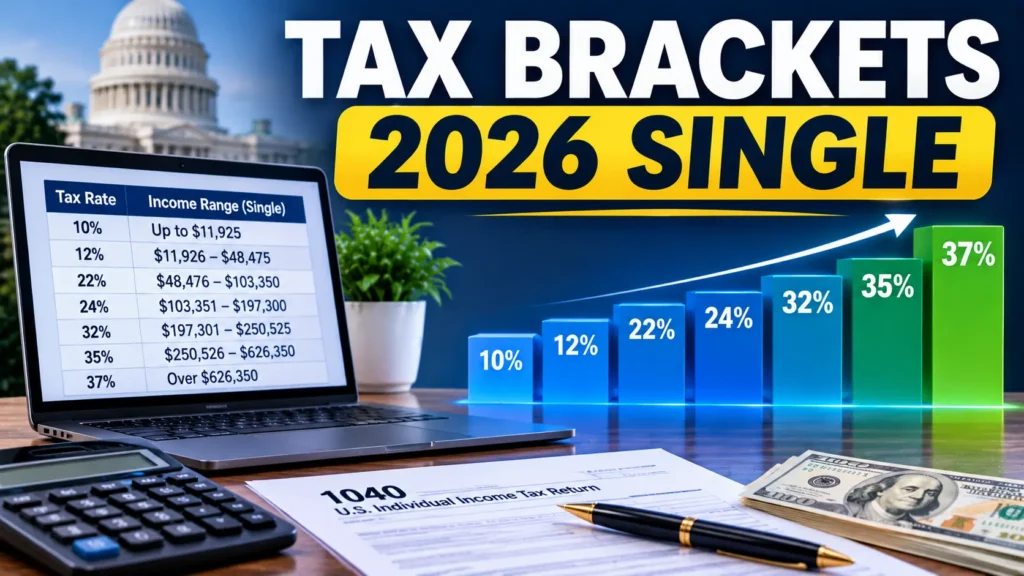
Understanding the 2026 tax brackets for single filers can help you estimate your federal income tax, plan your finances, and avoid surprises when filing your tax return. The U.S. federal income tax system uses a progressive structure, which means different portions of your taxable income are taxed at different rates.
For the 2026 tax year, federal income tax rates for single taxpayers range from 10% to 37%. The income thresholds have been adjusted, and the standard deduction for single filers is $16,100.
Whether you earn a salary, work independently, or receive other taxable income, knowing how these tax brackets work can help you understand your potential tax liability.
In this guide, we explain the 2026 federal income tax brackets for single filers, the standard deduction, how to calculate your tax, and what changes may affect your final tax bill.
The IRS has established seven federal income tax rates for the 2026 tax year. Each rate applies to a specific portion of your taxable income rather than your entire income.
Here is the 2026 federal income tax bracket table for single taxpayers:
| Federal Tax Rate | Taxable Income for Single Filers |
|---|---|
| 10% | $0 – $12,400 |
| 12% | $12,401 – $50,400 |
| 22% | $50,401 – $105,700 |
| 24% | $105,701 – $201,775 |
| 32% | $201,776 – $256,225 |
| 35% | $256,226 – $640,600 |
| 37% | Over $640,600 |
These thresholds apply to taxable income, which is generally your adjusted gross income after applicable deductions.
The highest federal income tax rate is 37%, but it applies only to the portion of taxable income above $640,600 for single filers.
The standard deduction reduces the amount of income subject to federal income tax. If you qualify and choose the standard deduction instead of itemizing deductions, you can subtract this amount from your income when calculating taxable income.
For the 2026 tax year, the standard deduction for single filers is:
$16,100
For example, if you earn $60,000 in annual income and qualify for the full standard deduction, your simplified taxable income calculation would be:
Your federal income tax is calculated using the brackets that apply to the $43,900 taxable amount, not the entire $60,000.
Your actual taxable income may differ because of additional adjustments, deductions, or other tax circumstances.
The U.S. federal income tax system is progressive. This means your income is divided into portions, and each portion is taxed at the applicable rate.
For example, if you are a single filer with $60,000 in taxable income, you do not pay 22% on all $60,000.
Instead, the tax is calculated as follows:
Your total federal income tax before credits would be:
| Income Portion | Tax Rate | Tax Amount |
|---|---|---|
| First $12,400 | 10% | $1,240 |
| Next $38,000 | 12% | $4,560 |
| Remaining $9,600 | 22% | $2,112 |
| Total | $7,912 |
This example shows why your marginal tax rate and effective tax rate are different.
Your marginal tax rate is 22%, but your effective federal income tax rate is approximately 13.19% of your $60,000 taxable income.
Your tax bracket depends on your taxable income after applicable deductions. The following examples show how different taxable income levels fit into the 2026 federal tax system.
| Taxable Income | Highest Marginal Tax Rate |
|---|---|
| $20,000 | 12% |
| $35,000 | 12% |
| $50,000 | 12% |
| $60,000 | 22% |
| $85,000 | 22% |
| $100,000 | 22% |
| $120,000 | 24% |
| $180,000 | 24% |
| $220,000 | 32% |
| $300,000 | 35% |
| $650,000 | 37% |
Remember that the highest marginal rate is not the rate applied to all your income. Each portion is taxed according to its own bracket.
Marginal and effective tax rates are two important concepts when understanding federal income taxes.
Your marginal tax rate is the rate applied to your next dollar of taxable income. It is determined by the highest tax bracket your taxable income reaches.
For example, if your taxable income is $85,000, your marginal federal tax rate is 22%.
Your effective tax rate represents the average percentage of your taxable income paid in federal income tax.
To calculate it, divide your total federal income tax by your taxable income and multiply the result by 100.
Formula:
Effective Tax Rate = (Total Federal Income Tax ÷ Taxable Income) × 100
For example, if your taxable income is $85,000 and your calculated federal income tax is $14,912, your effective tax rate is approximately 17.54%.
This is lower than your 22% marginal tax rate because your income is taxed across multiple brackets.
Gross income and taxable income are not the same.
Gross income generally refers to the income you receive before applicable deductions and adjustments. It may include:
Taxable income is the amount remaining after applicable adjustments and deductions are taken into account.
For example, a single taxpayer earning $75,000 may have a lower taxable income after claiming the standard deduction and any other eligible deductions.
Understanding this difference is essential because federal income tax brackets apply to taxable income, not simply your gross salary.
You can estimate your federal income tax by following a few basic steps.
Calculate your total taxable income sources for the year. Include wages, salary, bonuses, and other taxable income where applicable.
Subtract eligible adjustments to income to determine your adjusted gross income (AGI).
For 2026, the standard deduction for most single filers is $16,100. You may choose itemized deductions instead if you qualify and they provide a larger deduction.
Subtract your applicable deduction from your adjusted gross income.
Divide your taxable income into the appropriate tax brackets and calculate the tax for each portion.
Eligible tax credits can reduce your tax liability. Other taxes, such as self-employment tax or additional Medicare taxes, may also affect your overall tax bill.
Your final amount owed or refund depends on your complete tax situation, including withholding and estimated payments.
Several factors can influence how much federal income tax you pay during 2026.
Your total taxable income determines which tax brackets apply. Higher taxable income may place part of your earnings into a higher marginal tax bracket.
The 2026 standard deduction for single filers is $16,100. This reduces taxable income for taxpayers who qualify and claim it.
Tax credits can directly reduce your tax liability. Depending on eligibility, taxpayers may qualify for credits related to children, education, retirement savings, or other qualifying expenses.
Eligible contributions to certain retirement accounts may reduce current taxable income, depending on the account type and applicable rules.
Some taxpayers may qualify for additional deductions beyond the standard deduction. Eligibility requirements, income limits, and phaseouts may apply.
Federal tax brackets do not include state or local income taxes. Your total tax burden may be higher depending on where you live.
The IRS uses different income thresholds for different filing statuses. Single taxpayers generally have lower bracket thresholds than married couples filing jointly.
The following table compares the starting income for each federal tax rate in 2026.
| Tax Rate | Single | Married Filing Jointly | Head of Household |
|---|---|---|---|
| 10% | $0 | $0 | $0 |
| 12% | $12,400 | $24,800 | $17,700 |
| 22% | $50,400 | $100,800 | $67,450 |
| 24% | $105,700 | $211,400 | $105,700 |
| 32% | $201,775 | $403,550 | $201,750 |
| 35% | $256,225 | $512,450 | $256,200 |
| 37% | $640,600 | $768,700 | $640,600 |
Filing status can significantly affect your tax calculation. Your correct status depends on your marital situation and other IRS requirements.
The 2026 tax year covers income earned from January 1 through December 31, 2026.
Most individual taxpayers will file their 2026 federal income tax returns in 2027. The normal federal filing deadline is generally April 15, although weekends, holidays, or special IRS announcements can affect the exact deadline.
It is important to keep income records, deduction information, and tax documents organized throughout the year.
The 2026 federal income tax rates for single filers are 10%, 12%, 22%, 24%, 32%, 35%, and 37%. Each rate applies to a specific portion of taxable income.
The standard deduction for a single filer in 2026 is $16,100, subject to applicable eligibility rules.
The highest federal income tax rate is 37%. It applies to taxable income above $640,600 for single filers.
No. The 22% rate applies only to the portion of your taxable income within that bracket. Lower portions are taxed at the lower applicable rates.
Your taxable income determines your federal tax bracket. It is generally calculated after applicable adjustments and deductions are subtracted from your income.
No. The IRS provides different income thresholds for single filers, married couples filing jointly, married individuals filing separately, and heads of household.
Tax returns for the 2026 tax year are generally filed in 2027. The usual federal filing deadline is April 15, 2027, unless an applicable extension or special rule changes it.
No. Federal tax brackets apply to federal income tax. State and local income taxes are separate and depend on your location.
Understanding the 2026 tax brackets for single filers can make tax planning easier and help you estimate your federal income tax liability. The seven federal tax rates range from 10% to 37%, while the standard deduction for single taxpayers is $16,100.
Remember that tax brackets apply to taxable income rather than your entire salary. Your final tax bill may also depend on deductions, credits, retirement contributions, and other tax rules.
Reviewing your income and tax situation throughout the year can help you make informed financial decisions and prepare for filing your 2026 federal tax return in 2027.
Disclaimer: This article provides general educational information about U.S. federal income taxes for tax year 2026. Individual tax situations vary. Consult the IRS or a qualified tax professional for advice about your circumstances.
Bonus Tax Aggregate Calculator
Dual Scenario Hourly Calculator
Dual Scenario Salary Calculator
Standard vs. Itemized Deductions: Which Is Better for Your 2026 Taxes?
Investing in real estate does not always require purchasing a house, apartment, or commercial property. Real Estate Investment Trusts (REITs) allow investors to gain…
Saving for retirement becomes especially important as workers approach their 60s. For people who have not accumulated enough retirement savings, making additional contributions to…
Non-Qualified Retirement Plan: How It Works, Benefits, Types, and Tax Rules A non-qualified retirement plan can offer another way to save for retirement by…