Best REITs to Invest In 2026: Top Real Estate Investment Trusts to Consider
Investing in real estate does not always require purchasing a house, apartment, or commercial property. Real Estate Investment Trusts (REITs) allow investors to gain…

Saving for retirement becomes especially important as workers approach their 60s. For people who have not accumulated enough retirement savings, making additional contributions to a workplace retirement plan may provide an opportunity to strengthen their financial future.
The Super Catch-Up 401(k) provision introduced under the SECURE 2.0 Act allows eligible workers ages 60 through 63 to contribute more money to certain retirement plans than the standard catch-up contribution limit permits.
For 2026, the regular 401(k) contribution limit is $24,500. Workers age 50 or older may generally contribute an additional $8,000 in catch-up contributions if their plan allows it. However, eligible employees ages 60–63 can use a higher catch-up limit of $11,250.
This means an eligible worker in this age group could potentially contribute up to $35,750 to a 401(k) in 2026, subject to plan rules and applicable requirements.
Understanding how this retirement savings opportunity works can help workers evaluate their contribution options and prepare for retirement.
A Super Catch-Up 401(k) is an enhanced retirement contribution opportunity for eligible employees who turn 60, 61, 62, or 63 during a calendar year.
The provision was established by the SECURE 2.0 Act of 2022 and became available beginning in 2025.
The higher contribution limit is designed to help workers increase retirement savings during the years leading up to retirement.
Unlike the regular catch-up contribution available to employees age 50 and older, the super catch-up provision allows eligible individuals to make a larger additional contribution.
The provision may apply to certain:
The availability of the higher limit depends on the retirement plan and its provisions. Employees should confirm eligibility with their employer or plan administrator.
The IRS has announced the following contribution limits for 2026.
| Contribution Type | 2026 Limit |
|---|---|
| Standard 401(k) employee contribution limit | $24,500 |
| Regular catch-up contribution for workers age 50+ | $8,000 |
| Super catch-up contribution for eligible ages 60–63 | $11,250 |
| Maximum potential contribution for ages 50–59 and 64+ | $32,500 |
| Maximum potential contribution for eligible ages 60–63 | $35,750 |
The super catch-up limit replaces the regular $8,000 catch-up limit for eligible participants ages 60–63. It is not an additional $11,250 on top of the regular catch-up amount.
These limits generally apply to qualifying workplace retirement plans. Individual plan restrictions may result in lower contribution amounts.
To qualify for the enhanced catch-up contribution, an employee generally must turn age 60, 61, 62, or 63 during the calendar year.
For example:
The employee must also participate in an eligible retirement plan that permits the higher catch-up contribution.
Eligibility is based on age during the calendar year, not simply the employee’s age on the date of contribution.
An eligible employee who turns age 60 in 2026 may be able to contribute up to $35,750 to a qualifying 401(k) plan.
This total includes:
Suppose an employee turns 60 during 2026 and earns $120,000 annually.
If the employer’s retirement plan permits the full super catch-up contribution, the employee may be able to contribute $35,750 for the year.
The actual amount depends on the employee’s compensation, plan provisions, and other applicable restrictions.
This higher contribution opportunity may be particularly useful for employees who want to increase retirement savings during the final years of their working careers.
The main difference between the two provisions is the additional amount workers can contribute.
| Feature | Regular Catch-Up | Super Catch-Up |
|---|---|---|
| Eligible age | 50 and older | Ages 60–63 |
| 2026 additional contribution limit | $8,000 | $11,250 |
| Applies to qualifying 401(k) plans | Yes | Yes |
| Introduced under SECURE 2.0 | Enhanced limits adjusted | Yes |
| Requires plan support | Yes | Yes |
The enhanced contribution limit gives eligible workers an additional $3,250 in potential catch-up contributions compared with the standard catch-up limit in 2026.
Increasing retirement contributions can help workers build a larger retirement account balance over time.
Potential benefits include:
Eligible workers can contribute more money to their workplace retirement plans than the regular catch-up limit allows.
The additional contribution may be invested according to the plan’s available investment options.
Investment returns are not guaranteed, and account values can rise or fall.
Traditional 401(k) contributions are generally made before federal income taxes, which may reduce taxable income in the year of contribution.
Roth 401(k) contributions are made with after-tax dollars. Qualified Roth withdrawals may be tax-free.
The tax treatment depends on the type of contribution and the individual’s circumstances.
Workers who are behind on retirement savings may have an opportunity to contribute more during their final working years.
Another important retirement rule takes effect in 2026.
Under SECURE 2.0, certain employees who earned more than the applicable wage threshold from their current employer in the preceding year must make catch-up contributions on a Roth basis if their plan offers the required Roth feature.
For 2026, the applicable threshold is $150,000 in prior-year wages from the plan sponsor.
This means that eligible higher-income employees may not be able to make their catch-up contributions on a traditional pre-tax basis.
Roth catch-up contributions are made with money that has already been taxed.
Unlike traditional pre-tax contributions, Roth contributions generally do not reduce current taxable income.
However, qualified Roth distributions may be tax-free, subject to applicable rules.
Employees should review their plan’s Roth options and consider their current and expected future tax situation.
No. The higher contribution limit is not automatically available through every employer retirement plan.
A plan must allow the relevant catch-up contributions. Employers and plan administrators may have different implementation details.
Before increasing contributions, employees should ask:
Contacting the plan administrator can help avoid confusion about contribution limits and payroll deductions.
Workers who qualify may consider the following steps.
Confirm that you will turn age 60, 61, 62, or 63 during the calendar year.
Check whether your employer offers the enhanced catch-up contribution.
Determine how much you have already contributed during the year and how much remains before reaching the applicable limit.
If your budget allows, you may be able to increase your contribution percentage through your employer’s payroll system.
Consider the tax treatment of traditional and Roth contributions. Higher-income employees may be subject to the mandatory Roth catch-up rule.
Review pay statements and retirement account records to ensure contributions remain within the applicable limits.
Check how employer matching contributions work. Employer matches generally do not count toward the employee’s regular elective deferral limit, but they are subject to overall plan contribution limits.
Although higher contributions may help retirement savings, they are not suitable for every worker.
Contributing more money to a retirement plan means less money may be available in each paycheck.
401(k) accounts are designed for retirement savings. Early withdrawals may be subject to income taxes and additional penalties, depending on the circumstances.
Retirement plan investments can lose value. Contributions do not guarantee a specific retirement balance.
Roth catch-up contributions may increase current taxable income compared with traditional pre-tax contributions.
Workers should consider their income, expenses, debts, emergency savings, and retirement timeline before increasing contributions.
The enhanced catch-up contribution limit for eligible employees ages 60–63 is $11,250 in 2026. Combined with the standard $24,500 contribution limit, the potential total is $35,750.
Eligible employees who turn 60, 61, 62, or 63 during the calendar year may qualify, subject to plan rules.
No. It is an optional additional contribution opportunity for eligible employees.
Yes. The enhanced $11,250 limit replaces the standard $8,000 catch-up limit for eligible employees ages 60–63 in 2026.
Generally, no. The enhanced age range is 60 through 63. A 64-year-old may still qualify for the regular age-50 catch-up contribution if the plan permits it.
The availability depends on the retirement plan’s provisions. Employees should confirm with their plan administrator.
Traditional pre-tax contributions generally reduce current taxable income, subject to applicable rules. Roth catch-up contributions are made after tax and generally do not reduce current taxable income.
Certain employees whose prior-year wages from the plan sponsor exceeded the applicable $150,000 threshold must make catch-up contributions on a Roth basis if the plan provides the required Roth feature.
The Super Catch-Up 401(k) provision provides an important retirement savings opportunity for eligible employees ages 60–63.
In 2026, qualifying workers may contribute up to $35,750 to a qualifying 401(k) plan, including the enhanced $11,250 catch-up contribution.
The higher limit may help employees increase their retirement savings during the years leading up to retirement. However, eligibility, plan provisions, tax rules, and personal financial circumstances should all be considered before increasing contributions.
Review your employer’s retirement plan, verify the contribution limits, and consider consulting a qualified financial or tax professional to understand how the super catch-up provision applies to your situation.
Disclaimer: This article is for informational and educational purposes only and does not constitute financial, investment, or tax advice. Contribution limits and eligibility rules may change. Consult the IRS, your plan administrator, or a qualified professional for guidance specific to your circumstances.
Bonus Tax Aggregate Calculator
Dual Scenario Hourly Calculator
Dual Scenario Salary Calculator
Standard vs. Itemized Deductions: Which Is Better for Your 2026 Taxes?
Investing in real estate does not always require purchasing a house, apartment, or commercial property. Real Estate Investment Trusts (REITs) allow investors to gain…
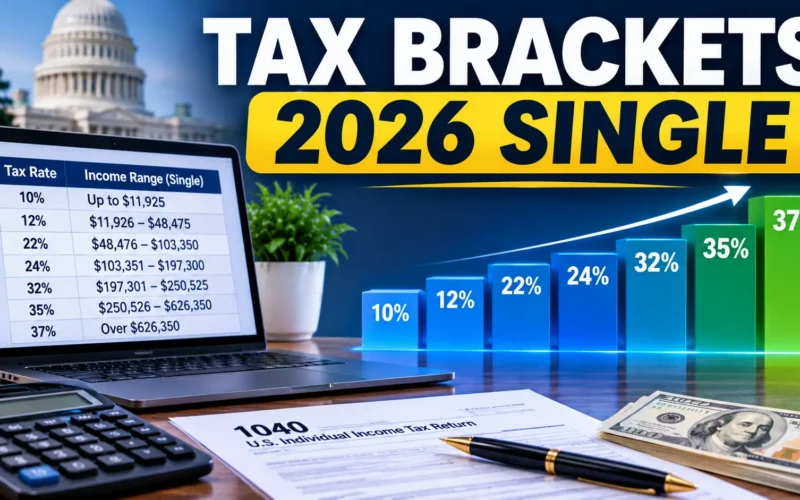
Understanding the 2026 tax brackets for single filers can help you estimate your federal income tax, plan your finances, and avoid surprises when filing…
Non-Qualified Retirement Plan: How It Works, Benefits, Types, and Tax Rules A non-qualified retirement plan can offer another way to save for retirement by…