
Cash Stuffing for a Month, Cash stuffing has been everywhere lately, with colorful budget binders and stacks of labeled envelopes filling up social media feeds. The idea itself is not new. It is a modern take on the envelope budgeting method your grandparents likely used, just with better looking folders. We wanted to know if it actually changes how you spend, or if it is mostly for show. So we tried it for a full month.

What cash stuffing actually is
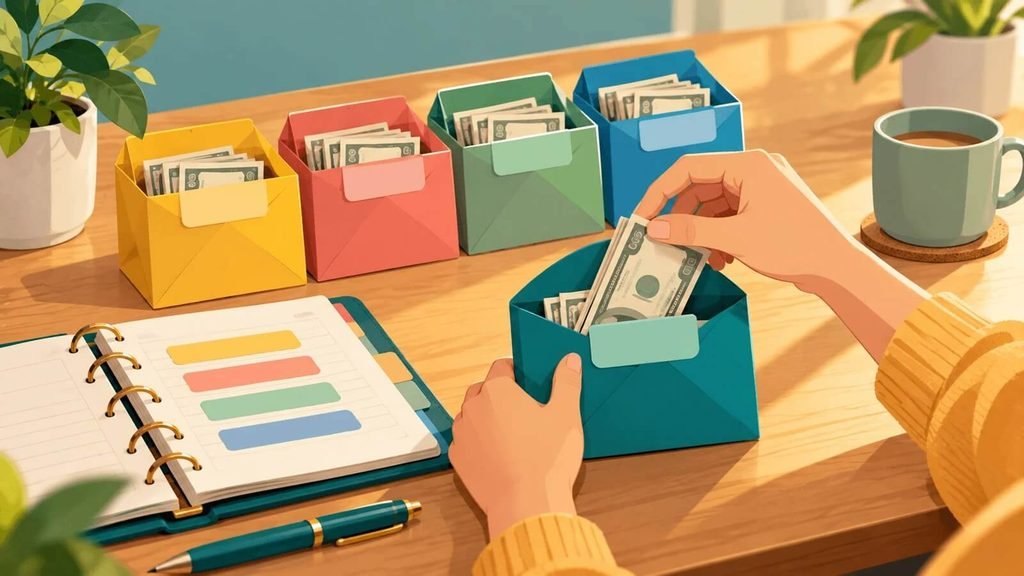
You withdraw your paycheck, or a portion of it, in cash and divide it into labeled envelopes for each spending category, such as groceries, fun money, transport, and gifts. Once an envelope is empty, spending in that category stops until the next payday. There is no card to tap and no app balance to ignore. The cash running out is the signal.(Cash Stuffing for a Month)
Setting it up for the first time
We started by listing our regular spending categories and assigning a cash amount to each one, based on the last three months of spending. Groceries, fuel, and personal spending money were the first three envelopes. A few categories, like rent and utilities, stayed as normal bank transfers since paying those in cash would be impractical and unsafe..(Cash Stuffing for a Month)
What the first week felt like
Physically handing over cash for small purchases felt strange at first. A card tap does not register the same way a shrinking stack of bills does. By the third day, we noticed ourselves pausing before a purchase in a way that a banking app notification never caused. That pause turned out to be the entire point of the method.

What changed by week two
The personal spending envelope ran low faster than expected, which was its own useful lesson. Seeing exactly how much was left, and how quickly small purchases added up, made the spending pattern obvious in a way a monthly statement never had. [Add your own real note here, such as which envelope ran out first and what you did about it.]
What we saved, and what we learned
By the end of the month, the categories using cash stuffing came in noticeably under what we would normally spend, mostly because the physical limit made overspending harder to ignore. The categories still paid digitally, like subscriptions and online orders, stayed exactly where they always were. That contrast was the clearest result of the whole test. The friction of cash changes behavior. The ease of a card does not..(Cash Stuffing for a Month)
Who this method suits, and who it does not
Good fit: people who overspend on small, frequent purchases like coffee, snacks, or quick online orders, and people who respond well to a visual, physical limit..(Cash Stuffing for a Month)
Not a great fit: people who rely on cashback or rewards from card spending, and people who already track every purchase closely in an app. For them, the extra effort of handling cash may not add much.
A safer, simpler version if you are not ready for envelopes
You do not need physical cash to get a similar effect. Open a separate account for one category you tend to overspend in, transfer a set amount at the start of each month, and only spend from that account. The spending limit becomes visible the same way an envelope does, without carrying cash around..(Cash Stuffing for a Month)
Is cash stuffing worth trying
It will not fix every budgeting problem, and it works best on categories where small purchases quietly add up. What it does very well is make spending visible again in a way that a card balance rarely does. For at least one category in your budget, that visibility alone might be worth the month it takes to test it..(Cash Stuffing for a Month)
FAQs
1. What is cash stuffing?
It is a budgeting method where you withdraw cash and divide it into labeled envelopes for categories like groceries and personal spending. Once an envelope is empty, spending in that category stops until the next payday..(Cash Stuffing for a Month)
2. Does cash stuffing actually save money?
For many people, yes. Physical cash creates a visible limit that makes overspending harder to ignore, especially in categories with frequent small purchases.
3. Is cash stuffing safe?
Keeping cash at home carries some risk of loss or theft. Many people use it only for smaller weekly categories and keep larger amounts like rent in a bank account..(Cash Stuffing for a Month)
4. What categories work best for cash stuffing?
Categories with frequent small purchases work best, such as groceries, dining out, and personal spending. Fixed bills like rent and utilities are usually better paid digitally.
5. Can I do cash stuffing without using physical cash?
Yes. Open a separate account for one spending category, transfer a set amount each month, and spend only from that account for a similar effect.
6. Is cash stuffing good for people who use credit cards for rewards?
Not always. If you rely on cashback or points from card spending, switching that category to cash means giving up those rewards, so it may not be the best fit..(Cash Stuffing for a Month)
Read More tips for saving Money
How to Lower Your Internet Bill Phone, and Cable Bill
how to cut pet costs without cutting care:
how to create a realistic monthly budget
How to Set up Cash Envelope Method for Beginners: A Step-by-Step Setup Guide
Read More Artical on Side Hustles and Extra Income
How to Price Your First Freelance Job With No Experience