how to price your first freelance job with no experience:
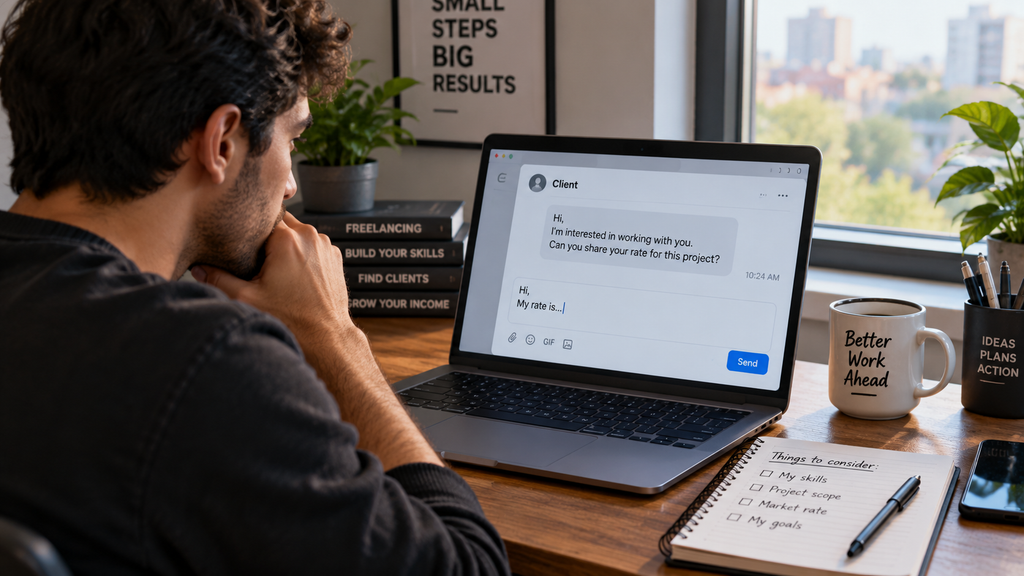
At last, you understand the message. “What do you charge?” is the question that freezes more side gigs than anything else when someone wants to pay you for the work you’ve been doing for free.
The majority of novices approach this in one of two ways. After choosing a number that seems pitifully low, they are hired, and three weeks later, they secretly regret it. Or they get scared, say something unrelated, and never get a response. You don’t learn anything about the true value of your work from either result.
Here’s how to get at a precise figure rather than an estimate.
How to Calculate Your Beginner Freelance Floor Rate
how to price your first freelance job with no experience:
Everyone advises novices to “research market rates.” That’s helpful in the long run, but market rates vary greatly and don’t indicate whether a particular task is worthwhile. Your floor does.
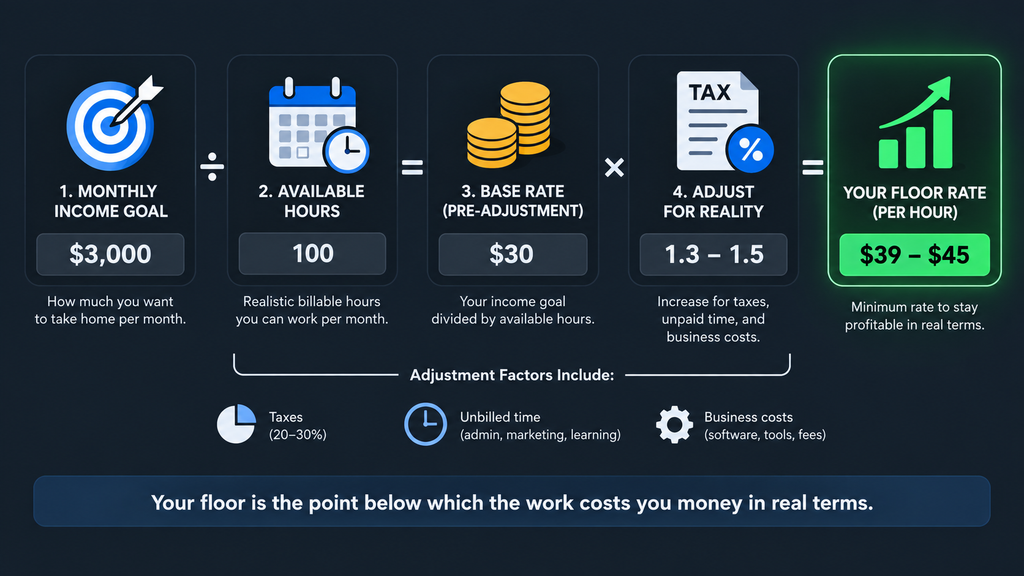
The lowest hourly wage that makes the work worthwhile at all is your floor. Determine how much you want to make each month from this side business, then divide that amount by the number of hours you can actually put in. $15 per hour is your floor if you want $600 per month and have ten hours per week available. That’s around forty hours per month.
how to price your first freelance job with no experience:
Now adjust it upward for the things employment quietly covers and freelancing doesn’t. You’re paying your own taxes, you have unpaid hours spent on emails and revisions and invoicing, and you have no paid time off. A common rule of thumb is to add 25 to 30 percent to your floor to account for the unbilled time and self-employment tax, so that $15 becomes closer to $19 or $20.
That’s the number below which a job costs you money in real terms. Anything under it, you decline, no matter how nice the client seems.
Hourly vs Project Pricing for Your First Freelance Job
how to price your first freelance job with no experience:
Go look now. go at what freelancers with comparable experience have listed on their profiles, go through job sites in your niche, and see if any pricing surveys have been released for your industry. The range is what you want, not a single figure.
Instead of sitting at the bottom of that range, beginners usually sit at the bottom third. There’s a distinction. Since price-shopping customers are typically the ones who bargain the hardest on everything else as well, charging the absolute minimum attracts the most difficult-to-work-with clients and communicates inexperience more loudly than a little higher rate.
How to Price a Freelance Project Instead of Charging Only Hourly
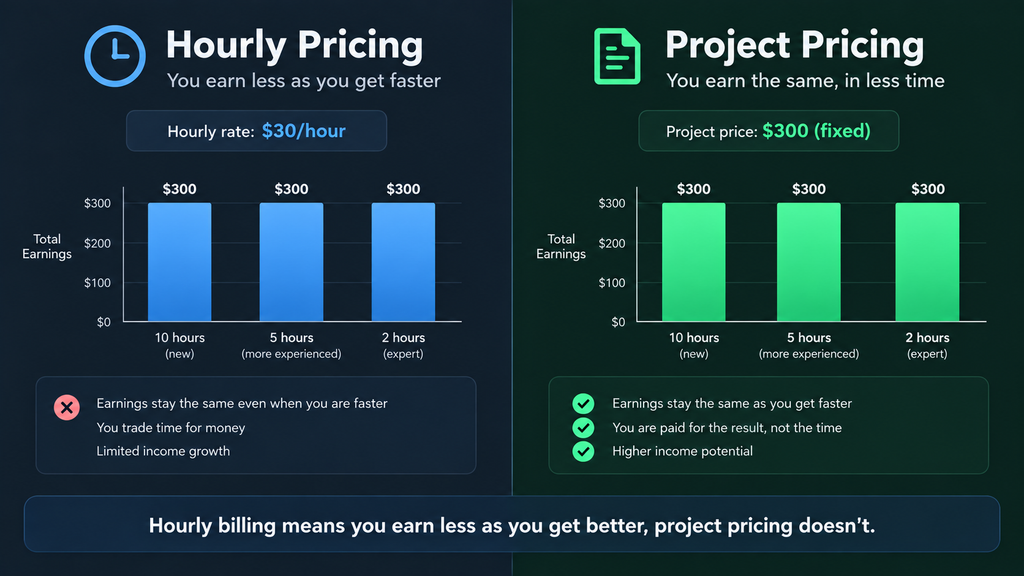
Hourly pricing penalizes you for increasing your speed. The same task takes less time as you get better, yet hourly billing means you get paid less for improving. Additionally, it encourages customers to inquire about how long anything took.
how to price your first freelance job with no experience:
Both are fixed by project pricing. Honestly estimate the amount of hours, multiply it by your modified floor rate, add 20 to 30 percent for revisions and unforeseen expenses, and report the result as a single figure.
Your initial estimations will be inaccurate. Keep track of the real hours, even if they are only approximate. You’ll have actual data on how long your work takes after three or four projects, and your quotes will no longer be estimates.
Say the number without flinching
how to price your first freelance job with no experience:
The mechanics matter less than the delivery. State your price plainly, don’t apologize for it, and don’t immediately offer a discount to fill the silence.
“For a project like this, my rate is $[X]. That includes [what’s included] and two rounds of revisions.”
Then stop. The pause feels much longer to you than it does to them.
If the client says the budget is lower, you have two decent options and one bad one. You can reduce the scope to match the budget, which keeps your rate intact. You can decline politely, which is fine and happens constantly. What you shouldn’t do is keep the same scope at a lower price, because that sets the rate for every future job with that client.
Put revisions and scope in writing before you start
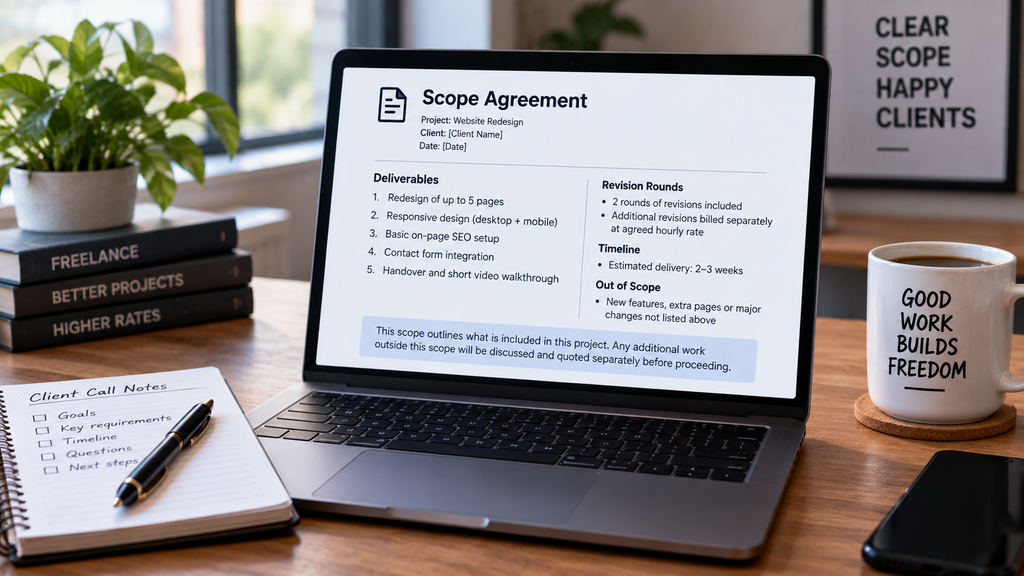
how to price your first freelance job with no experience: Underpricing is not the fastest way to lose money on a freelance assignment; scope creep is. A task that was quoted for one deliverable ends up with four, and “quick changes” are delivered weeks later.
Make a list of what is included, the number of revision rounds, and what happens if the client requests more before you begin. For small works, an email confirming the scope is sufficient; a formal contract is not necessary. The existence of a documented baseline is important, since adding work is a discussion about cost rather than an assumption.
How to Increase Your Freelance Rates as You Gain Experience
how to price your first freelance job with no experience: Increase your rate when you’ve completed a few assignments and have a portfolio. The simplest approach is to leave current clients where they are for the time being and quote the new number to new queries. Without jeopardizing your current work, you get to see if the increased rate holds.
The rate is typically still too low if new customers consistently say “yes” right away with no resistance at all. It’s common and beneficial to encounter some opposition when quoting.
FAQs
What should I charge for my first freelance job?
To determine your floor rate, divide your monthly income target by the number of hours you have available. Then, add 25 to 30 percent for taxes and unbilled time. Aim for the lower part of the range when comparing that to market rates.
Should I charge hourly or per project?
how to price your first freelance job with no experience: Per project is usually better, since hourly pricing means you earn less as you get faster. Estimate your hours, multiply by your rate, then add a 20 to 30 percent buffer for revisions.
Is it bad to charge very low rates when starting out?
Charging the absolute minimal tends to draw in the most challenging customers and conveys inexperience. In the lowest third of the market range, a marginally higher rate is typically more effective.
What do I do if a client says my rate is too high?
Reduce the scope to fit their budget, or decline politely. Avoid keeping the same scope at a lower price, since that sets the baseline for all future work with that client.
How do I avoid doing extra unpaid work?
how to price your first freelance job with no experience: Even if it’s simply an email, make sure the scope and number of revision rounds are confirmed in writing before beginning. Anything more than that is no longer an assumption but rather a pricing discussion.
When should I raise my freelance rates?
After a handful of completed projects. Quote the higher rate to new inquiries first while keeping existing clients at their current rate, so you can test whether it holds.
Read More tips for saving Money
How to Lower Your Internet Bill Phone, and Cable Bill
how to cut pet costs without cutting care:
how to create a realistic monthly budget
How to Set up Cash Envelope Method for Beginners: A Step-by-Step Setup Guide
Read More Artical on Side Hustles and Extra Income
How to Price Your First Freelance Job With No Experience