
How to Budget on an Irregular Income: Standard budgeting advice, which assumes that the same amount of money will show up in the account on the same day every month, is not available to most freelancers, gig workers, and commission earners. When one month’s income is $1,800 and the next is $5,200, a typical budget breaks suddenly. You either splurge during the prosperous months or panic during the difficult ones.
Increasing the budget is not the answer. It entails setting up a system that separates your earnings and outlays so that the monthly swings don’t interfere with your day-to-day activities.
Start with your lowest realistic month, not your average
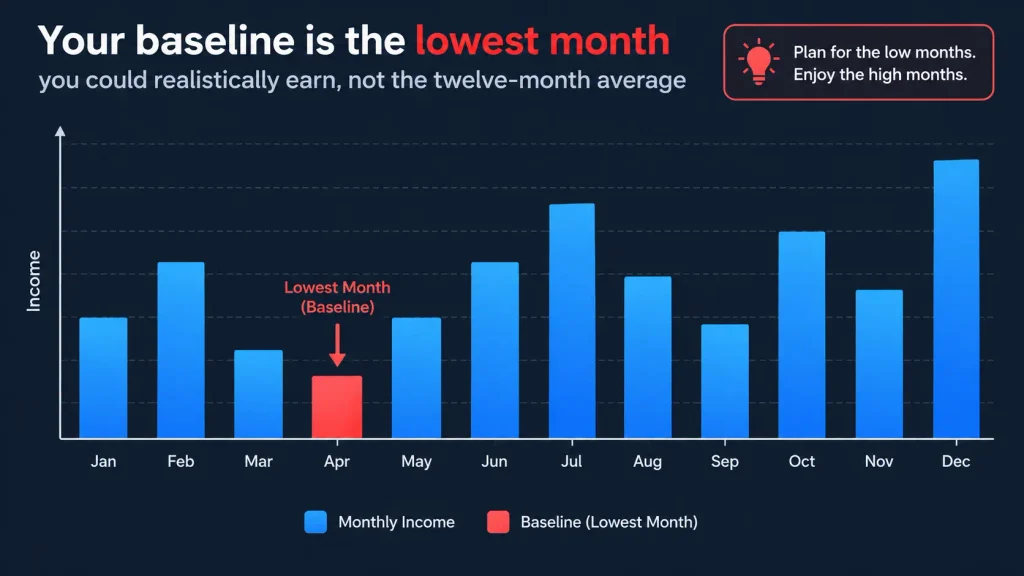
How to Budget on an Irregular Income: It seems sense to base your budget on the average of your prior year’s earnings. This is not the proper place to begin. Your budget quietly assumes that those great months will continue since they raise the average.
Instead, use your revenue over the preceding 12 months to determine which month was the lowest. That number, or anything close to it, is your baseline. It’s the amount you know you can count on, even in the worst of situations. That budget must cover things like rent, utilities, groceries, insurance, minimum debt payments, and other essentials. If they don’t, the first problem must be remedied, either by lowering fixed costs or establishing a more steady income floor before taking any further action.
Build a buffer account and treat it like a shock absorber
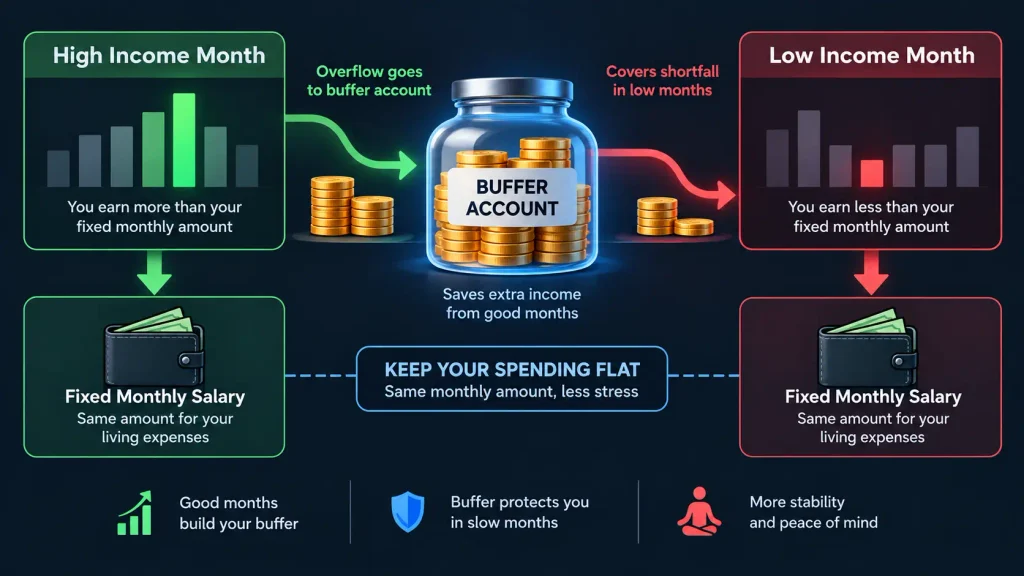
How to Budget on an Irregular Income: This component is essential to everything else. To make up for the gaps in unsuccessful months, create a second account, don’t check it every day, and use it to save extra money from successful months.
The way it operates is that any money you earn in a given month that exceeds your baseline goes straight into the buffer. You deduct the difference from the buffer to get back to your baseline when you earn less in a given month. Your expenditures remain unchanged. The account does the absorption.
Try to keep basic expenses there for two or three months. That is not an emergency fund, which is kept separate and unchanged. For the real variations in revenue, this acts as working capital.
Pay yourself a fixed “salary” on a set date
How to Budget on an Irregular Income: Stop making direct purchases from anything that ends up in your business or primary account once the buffer has some cushion. Instead, live off of a set sum that is transferred to your personal bank account on the same day every month.
Establish the wage at or marginally less than your starting point. Above it, everything remains in the buffer. The rest of budgeting is made possible by this one modification since you now have the one requirement for a typical budget: a predictable amount to work with.
Set aside taxes the moment money comes in, not later
How to Budget on an Irregular Income: If you’re self-employed, no one is withholding for you, and the tax bill arriving all at once is the most common reason irregular-income budgets collapse. Move a percentage of every payment into a separate tax account the same day it arrives. Twenty-five to thirty percent is a common starting point for many freelancers, though the right number depends on your income level and where you live, so it’s worth confirming with a tax professional for your situation.
Treat that account as money that was never yours. Don’t count it in your baseline calculation, don’t borrow from it in a slow month.
Rank your expenses so you know what gives first
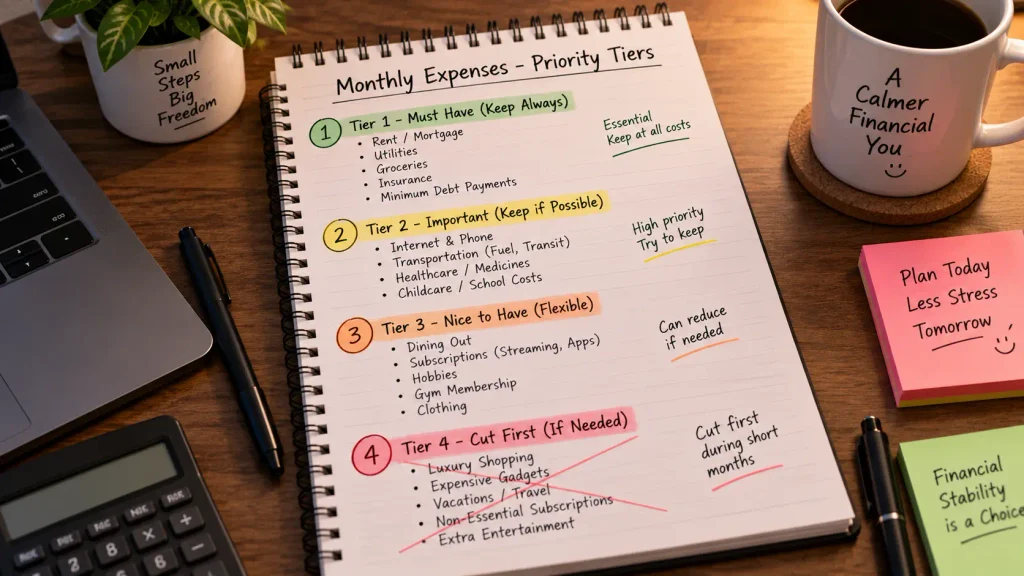
Some months turn out worse than anticipated, even with a buffer. Choose the order beforehand, while you’re at ease, as opposed to in the middle of a panic.
Put your spending into four categories: what keeps you employed (internet, tools, transportation), what keeps you out of trouble (minimum debt payments, insurance), and everything else. You start at the bottom tier and work your way up in a legitimately short month. Putting this in writing indicates that a poor month is a choice you’ve already made rather than a rush.
Review the baseline every six months
How to Budget on an Irregular Income: Income patterns shift. A client leaves, a contract renews bigger, a seasonal pattern changes. Twice a year, recalculate your lowest realistic month and adjust your salary to match. If your floor has risen, you can pay yourself more. If it’s dropped, better to find out during a review than during a shortfall.
The first few months of running this feel slow, mostly because the buffer is still thin and there’s nothing absorbing the swings yet. It gets easier around the point where the buffer covers a full month of expenses. That’s usually when irregular income stops feeling like a monthly emergency and starts feeling like a scheduling problem.
FAQs
How do I budget when my income is different every month?
Base your budget on your lowest realistic month rather than an average, and use a separate buffer account to hold overflow from high months so it can cover low ones.
What is a buffer account and how is it different from an emergency fund?
How to Budget on an Irregular Income: A buffer account smooths out normal income swings month to month. An emergency fund is separate and reserved for genuine emergencies like a job loss or major repair.
How much should I pay myself from freelance income?
Set your salary at or slightly below your baseline, meaning the lowest month you could realistically earn. Everything above that stays in the buffer.
How much should I set aside for taxes as a freelancer?
How to Budget on an Irregular Income: Many freelancers start around twenty-five to thirty percent of each payment, but the right figure depends on your income and location, so confirm it with a tax professional.
What should I cut first in a bad month?
Rank your expenses into tiers ahead of time, with housing and food at the top and discretionary spending at the bottom. Cut from the bottom tier upward.
How often should I update my baseline number?
How to Budget on an Irregular Income:
Every six months. Income patterns change, and a stale baseline either underpays you or sets a salary you can’t actually sustain.